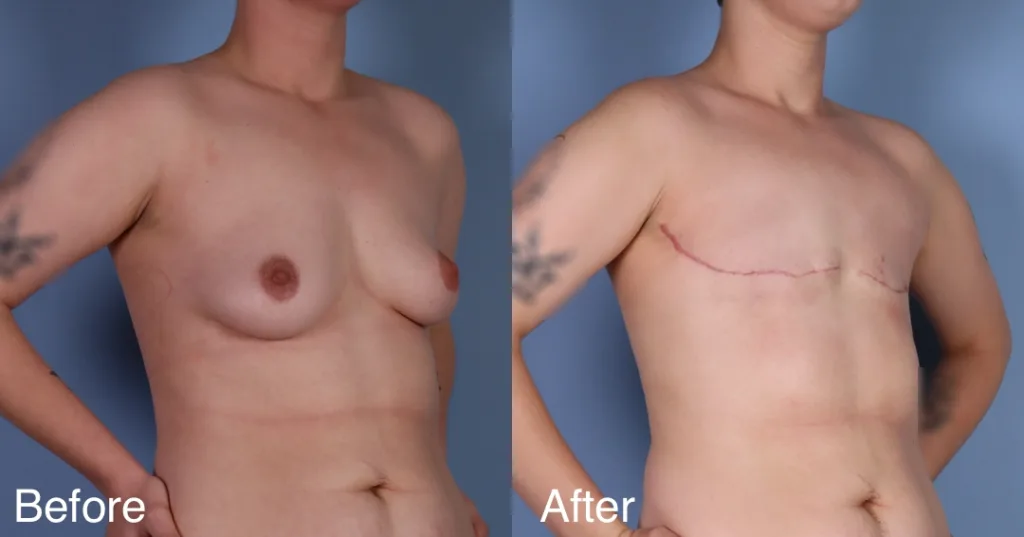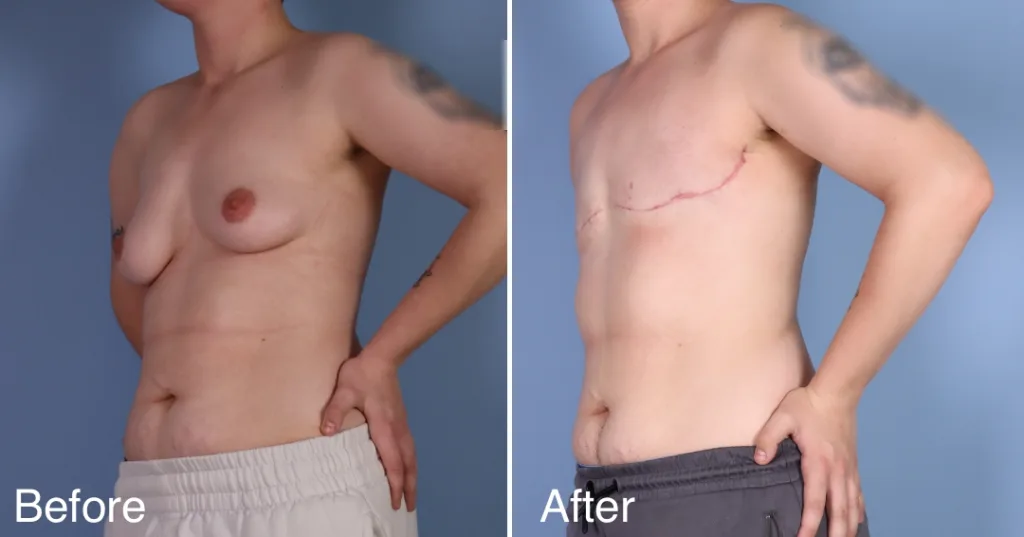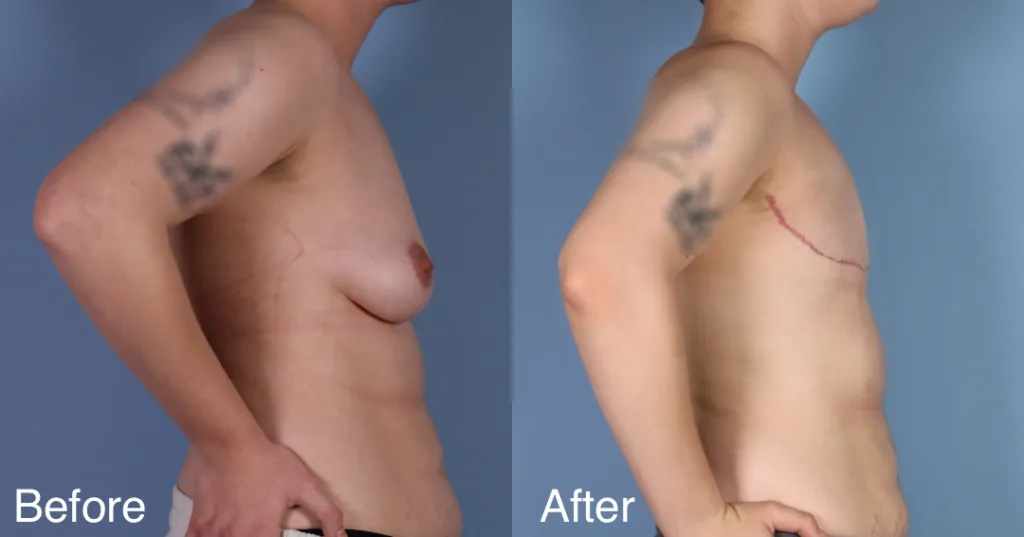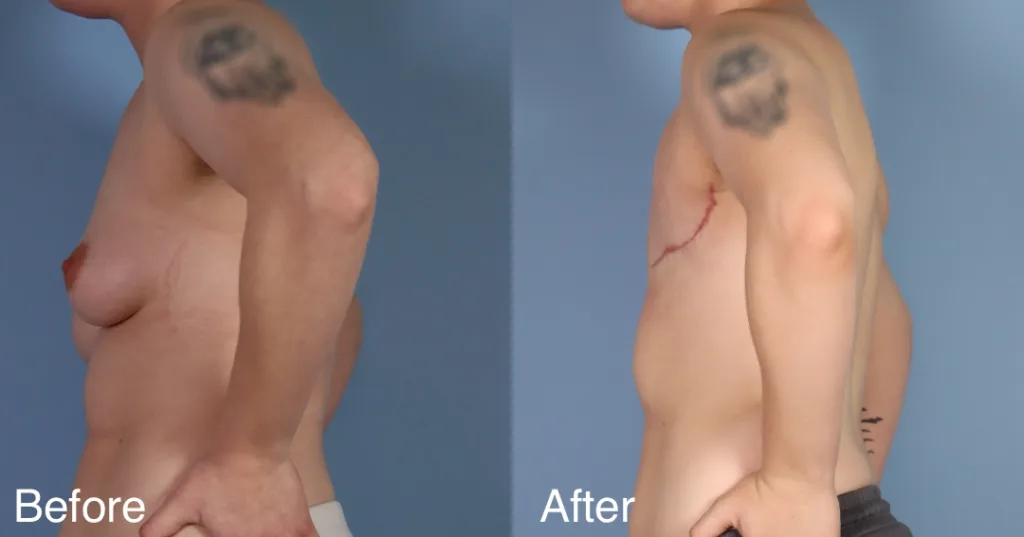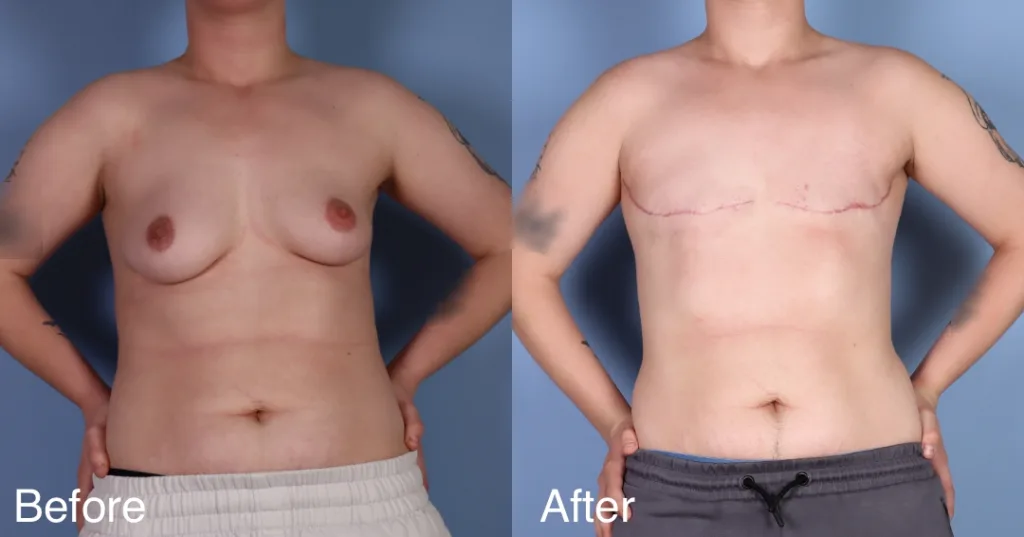

Chest masculinisation surgery, or top surgery, requires different incisions around the chest depending on the type of surgical techniques needed for the best results. This can cause scarring that many patients may have concerns about.
In this blog, we will discuss the different types of top surgery scars and what you can do to manage scarring during your recovery.
Book a consultation with our body contouring surgeon, Dr. Omar Tillo, today and find out how our unique approach to aftercare can help to minimise scarring.
Types of Top Surgery Scars & How They Heal
The surgical techniques required during your top surgery procedure to achieve the desired result can produce different degrees of scarring:
Double Incision Top Surgery
The double incision approach to top surgery is the most invasive and best for patients with medium to large chests. It requires two horizontal incisions on either side of the chest, through which the glandular tissue and excess skin is removed, flattening the chest.
This technique results in two scars along the ridge of each pec muscles. Typically, the nipple is also repositioned and resized to fit the new chest, leaving a scar along the border of the areola.
Periareolar Top Surgery
The periareolar technique is ideal for those with small to medium chests, and requires a circular incision around the areolar to remove the breast tissue and tighten the skin.
Therefore, a scar remains around the border of the areola, which can be partially disguised by the natural pigment of the area.
Keyhole Top Surgery
Keyhole top surgery is the least invasive type of chest masculinisation surgery, and only requires a series of tiny incisions along the bottom half of the areolas. However, this procedure is only suitable for those with very small breasts (an A cup or smaller) with excellent skin elasticity.
Like periareolar top surgery, the scarring from the keyhole technique is often disguised by the pigment of the areola.
What Affects How Top Surgery Scars Heal?
There are several factors that can affect how your top surgery scars heal:
- Surgical skill – A good surgeon can place incisions where they are less visible and blend with the natural contours of the body.
- Comprehensive Aftercare – A smooth recovery with good wound healing can reduce the appearance of scarring in the long term, making good aftercare essential.
- Genetics – Some people are more genetically predisposed to abnormal scarring, including hyperpigmented scars, thickened scarring and keloid scars.
- Health issues – Those with high blood pressure can experience more inflammation around scars due to the damaging effect on blood vessels.
- Smoking – Nicotine consumption can reduce blood flow, causing poor wound healing.
Can Surgeons Do Anything To Minimize The Appearance of Scars?
A good surgeon is able to make incisions in areas where scarring is less noticeable and blends with the natural contours of the chest.
In addition, an experienced surgeon, such as Dr. Tillo, can suture the wounds neatly and effectively, reducing the risk of tears that can result in more prominent scarring.
At CREO, we will also closely monitor your recovery, and provide an exclusive, comprehensive aftercare package to ensure that your wounds are healing as expected, identifying any concerns early to prevent complications that can worsen scarring. After you are fully healed, we also offer complimentary scar treatment to manage any remaining scarring for your additional peace of mind.
The Recovery Timeline Post-Operation: What To Expect
You can expect to go through several stages as your body heals after surgery:
- Immediately after surgery – You may experience side effects such as bruising, soreness and inflammation around the chest, which should gradually dissipate. Keeping the incisions clean during this time is essential in avoiding complications and ensuring smooth scarring.
- 1-2 weeks after surgery – You can resume light activities and office work. The incision sites may appear red and most visible as the sutures dissolve.
- 3-4 weeks after surgery – Sutures should now be dissolved, and darkened scars will start to form as the skin heals itself.
- 4-6 weeks after surgery – You should be cleared for more strenuous activity at this point. You will also be able to stop wearing your compression garment at the 6 week mark. Scarring should be lighter, flatter and softer.
- 6 months – Your final results will now be visible. You may choose to undergo laser scar treatment at this time to manage any remaining scarring.
Scar Care Tips for Top Surgery Patients
There are several steps you can take to minimise scarring after surgery:
- Aftercare is essential – Follow all of the advice given by your surgeon and attend your follow-up appointments to identify complications early
- Keep the wounds clean – Use hibiscrub and clean the area as directed to avoid infection
- Don’t overexert yourself – In the early stages of healing, avoid straining the stitches as this can cause wound breakdown, worsening scarring
- Use silicone tape – After the wounds have healed, use silicone tape to flatten and minimise the appearance of scars
- Consider scar treatments – Laser scar removal can improve the appearance of scars by applying heat to the deep layers of the scarred skin, stimulating collagen production for rejuvenation
Our Before & After Results: See Real Patient Outcomes
* Please note this patient also requested the removal of the nipples. More patient photos are available to view in clinic.